Reconnecting Campen Creek to its floodplain and restoring wetlands to improve water quality and habitat for salmon, steelhead and other wildlife
The Campen Creek Reconnection Project is a 9-acre urban restoration initiative located within Mable Kerr Park - a popular urban natural area in Washougal, Washington. The project, which is co-led by the Lower Columbia Estuary Partnership and the City of Washougal, enhances habitats both within the park and downstream in the recently restored Steigerwald Lake National Wildlife Refuge, by re-establishing the natural connection between Campen Creek and its floodplain.
The Campen Creek Reconnection Project broke ground in August 2025 and construction ended in October 2025. Professional foresters will continue to work on the site planting native trees and shrubs for several more years. The $1 million project was paid for through five different grants secured by the Estuary Partneship and the City of Washougal.
Check out the before and after project photos and benefits:
Bordering the Orchard Hills Golf Course, Campen Creek heads downstream into Mable Kerr Park. The majority of alder trees within the park were dead or dying: approximately 70 hazard trees were felled within the park and repurposed as wood habitat structures throughout the project area.
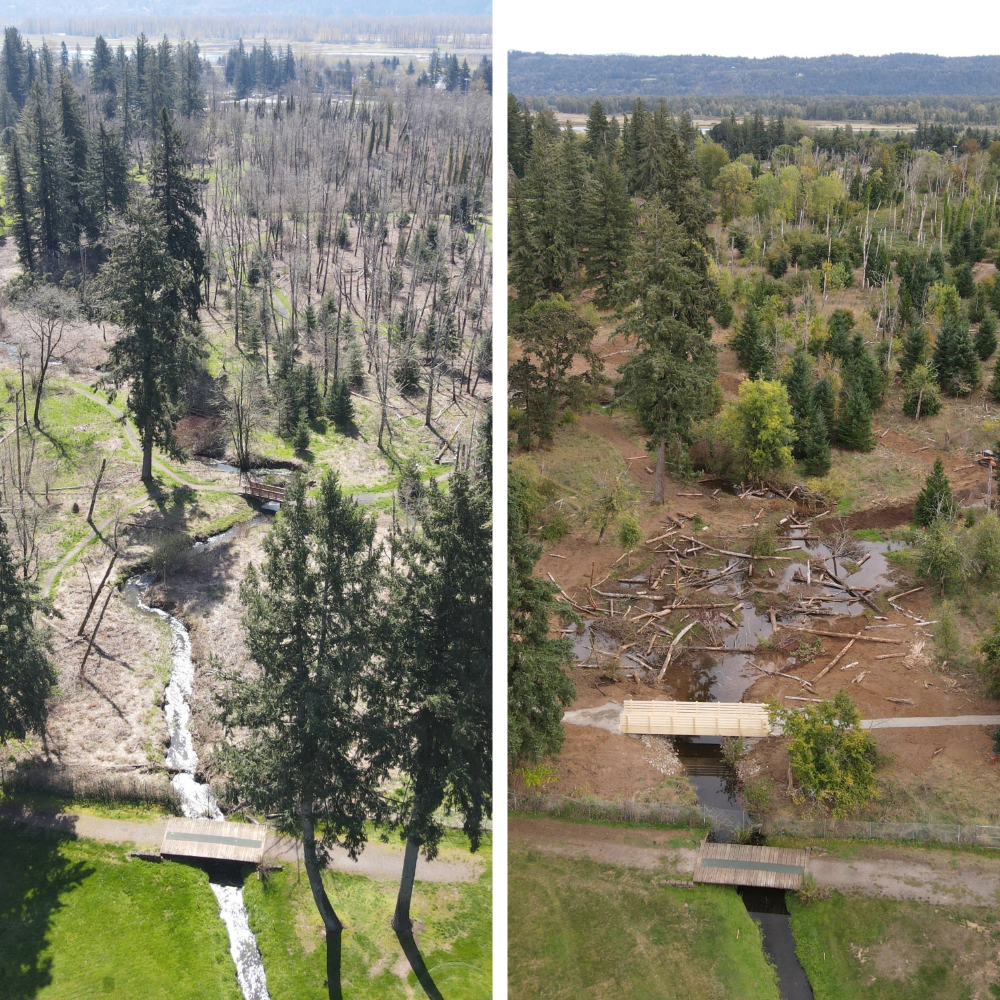
Despite higher winter flows, Campen creek was disconnected from its adjacent floodplain due to an incised channel as seen near site of old bridge. Construction restoration activities in this area included recontouring the creek and surrounding floodplain, installing habitat wood and relocating and extending the trail. The old bridge was removed and replaced with a new, larger bridge further upstream to allow the creek to slow and expand into its floodplain.
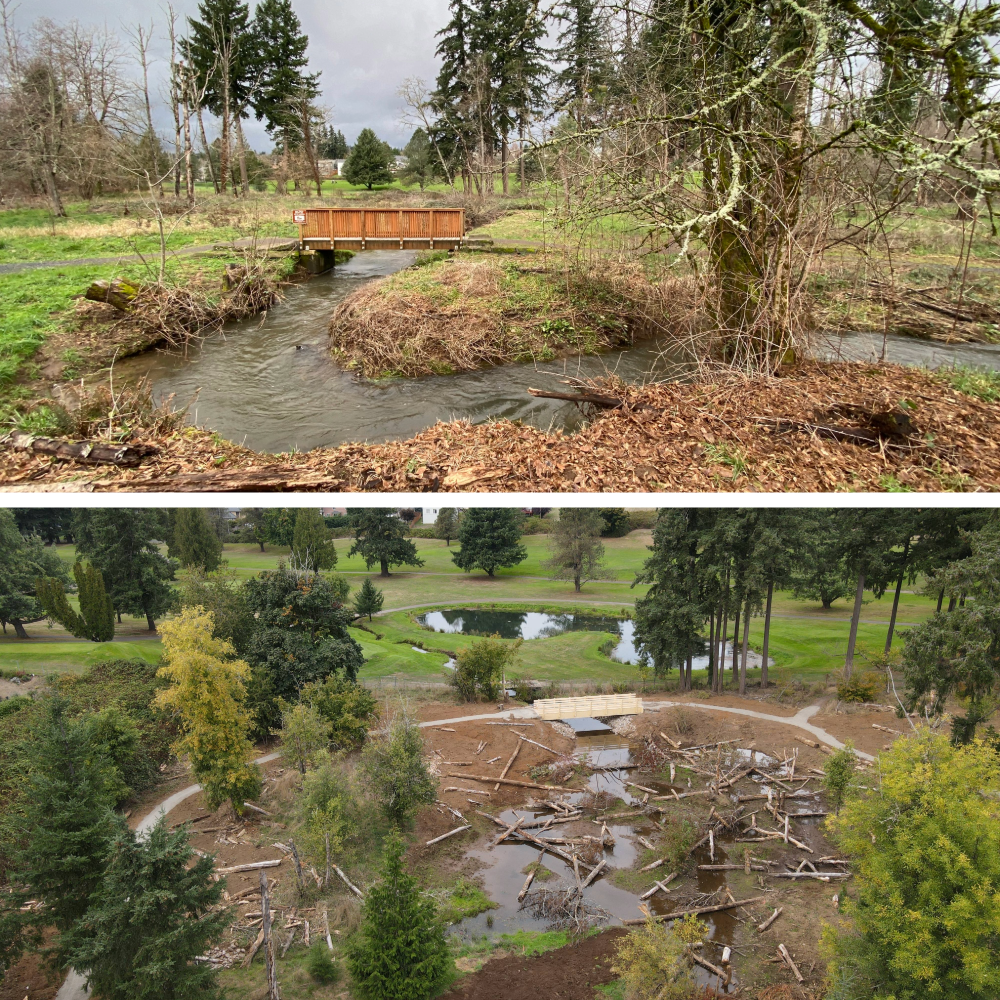
Campen Creek within Mable Kerr Park, was incised, 2-4 feet on average, and largely disconnected from its adjacent floodplain and wetlands. Invasive weeds (including reed canary grass and Himalayan blackberry) dominated the creek banks with little to no native vegetation cover. With construction restoration now complete, revegetation will include planting over 20,000 native trees and shrubs to help shade the creek and stabilize its banks.
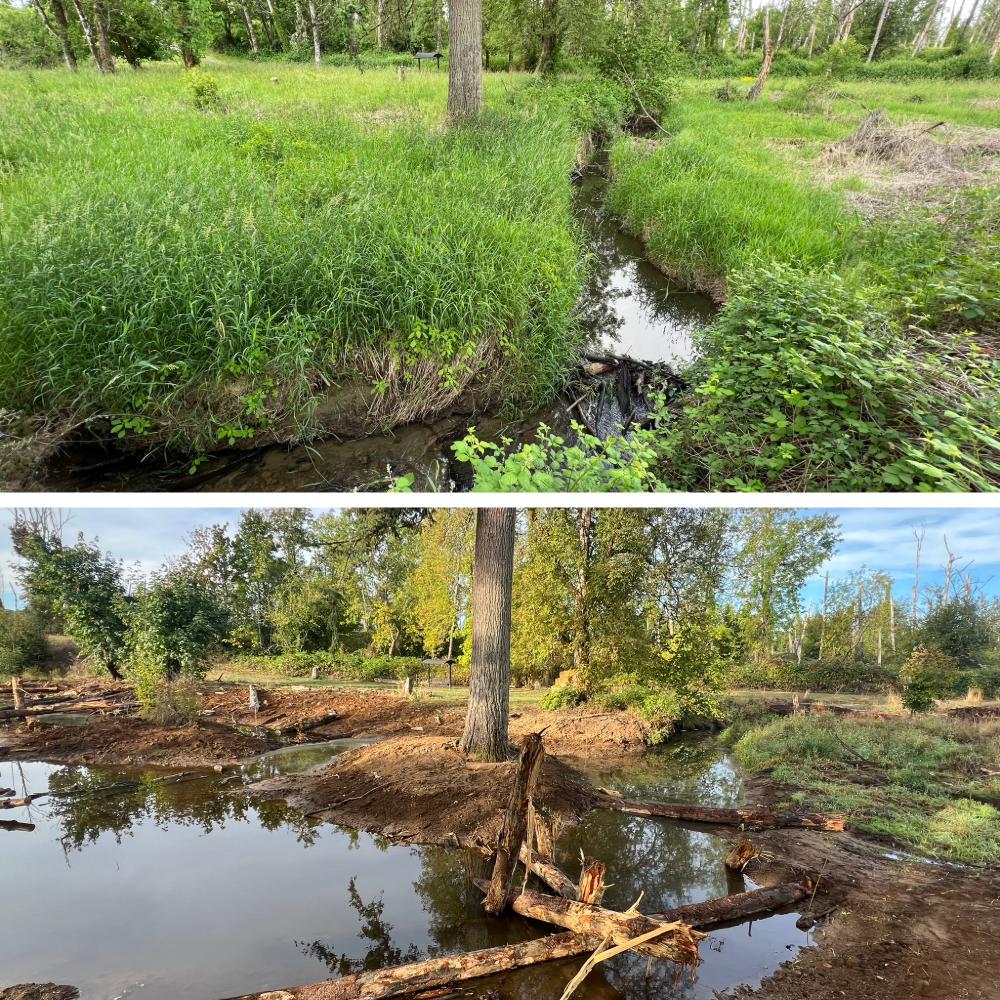
Campen Creek’s artificial and degraded single creek channel was restored to a natural floodplain that includes new wetlands, a meandering creek channel, and wood habitat structures. A new spur trail with an overlook was added to provide views and allow more wildlife observation into this southern section of the park.
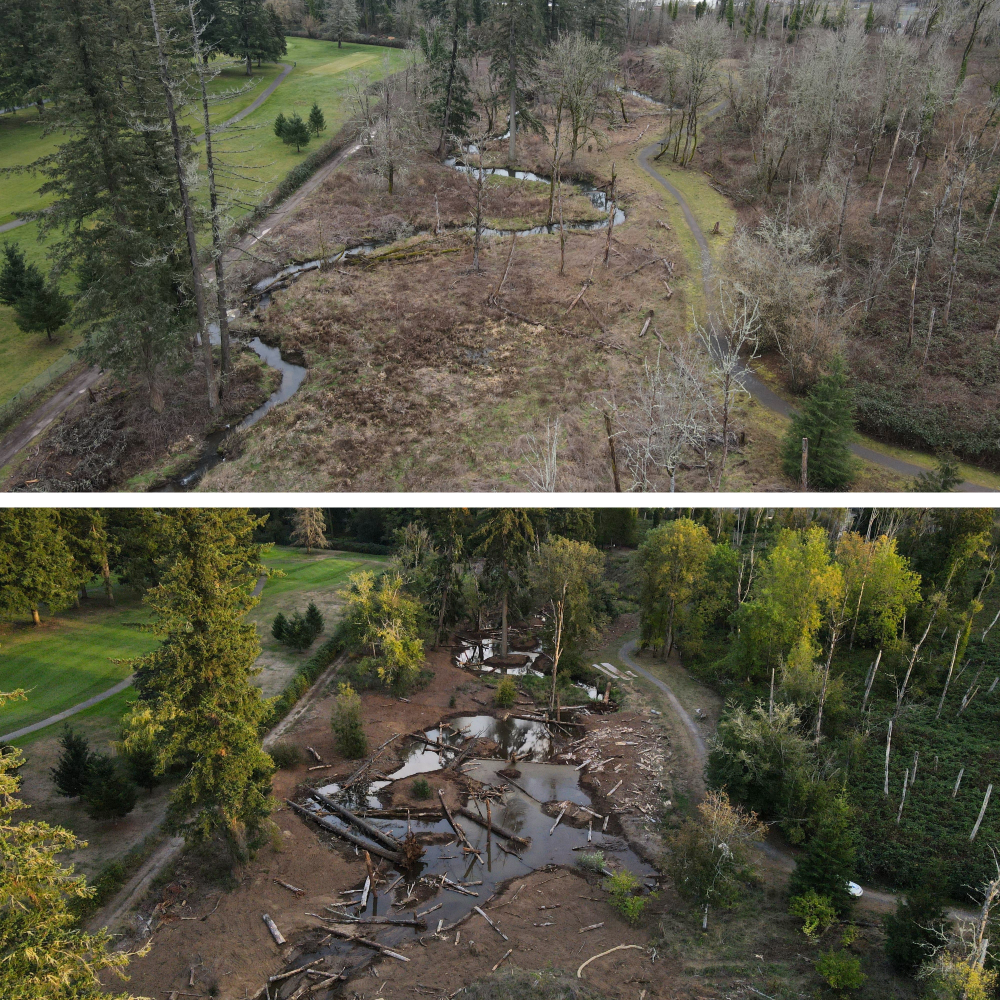
Floodplain reconnection benefits for fish and wildlife:
- A natural floodplain provides excellent spawning and rearing habitat for salmon, steelhead, and lamprey in Campen Creek.
- Reconnecting the floodplain increases the landscape’s capacity to absorb and store water during flood events. This reduces erosion and flood risk in the rainy season while increasing the supply of cool, clean water in the creek during dry summer months.
- Campen Creek flows into Steigerwald Lake National Wildlife Refuge’s Gibbons Creek and its reconnected floodplain, which is used as rearing habitat by juvenile salmonids from throughout the Columbia River basin. Therefore, this project not only benefits salmon in Campen Creek, but salmon from throughout the Columbia River basin.
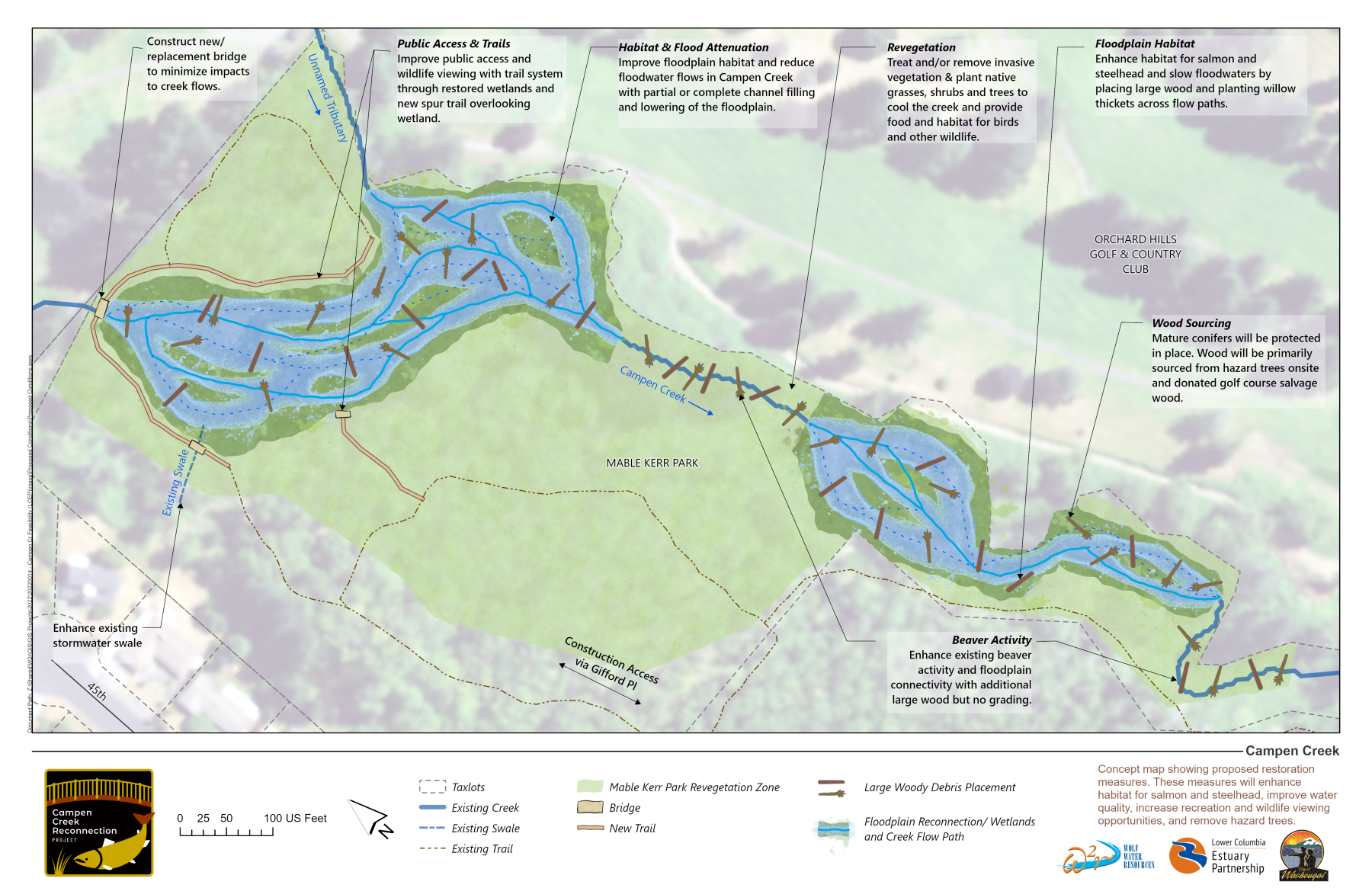
The Campen Creek Reconnection Project conceptual design map. Click to see a larger version.
The Campen Creek Reconnection Project has direct and immediate benefits for people:
- The project improved public safety by removing approximately 70 hazardous trees, primarily dead or dying alders, to prevent potential injuries to park visitors. These trees, along with damaged and hazard trees donated by Orchard Hills Golf & Country Club were repurposed for floodplain restoration along Campen Creek.
- The popular walking path along Campen Creek was extended and a new, longer bridge was installed over Campen Creek to facilitate floodplain restoration and bring people closer to nature.
- Opportunities to observe birds, salmon, and other wildlife will increase as these species thrive in the high-quality habitat created by the project.
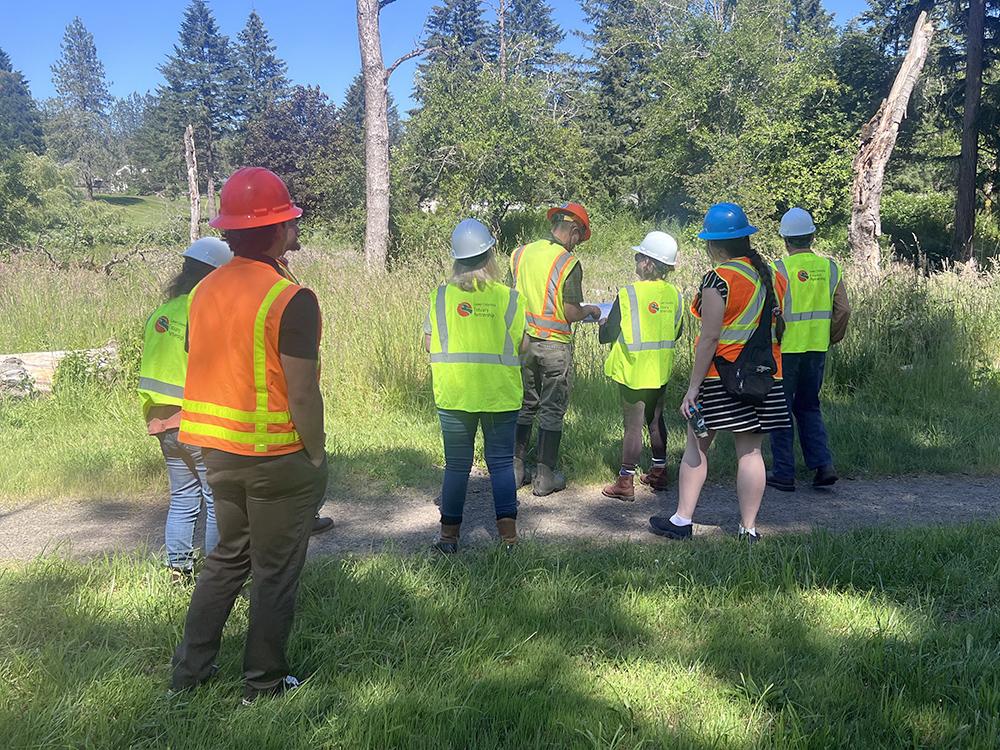
During a site tour, participants wore hard hats because of safety risks from hazardous trees.
The Campen Creek Reconnection Project is one of two large-scale water quality projects underway in Washougal. The Lower Columbia Estuary Partnership, City of Washougal, and the Washougal School District are also starting work on the Campen Creek Stormwater Improvement Project. This project aims to address an issue at Washougal High School and surrounding city streets where stormwater from nearly 9 acres of impervious surface discharges through a pipe, mostly untreated, directly into Campen Creek above Mable Kerr Park.
This project was made possible through funding from the National Oceanic and Atmospheric Administration’s Pacific Coastal Salmon Recovery Fund, the Washington State Salmon Recovery Funding Board, the Infrastructure Investment and Jobs Act, the National Fish and Wildlife Foundation, Bonneville Environmental Foundation, and the Washington Department of Ecology’s Centennial Clean Water Program (funded wholly or in part by the United States Environmental Protection Agency under an assistance agreement to the Washington State Department of Ecology. The contents of this document do not necessarily reflect the views and policies of the Environmental Protection Agency, nor does the mention of trade names or commercial products constitute endorsement or recommendation for use.)
Join the project's mailing list for the most up-to-date information and announcements about the Campen Creek Reconnection Project.
Campen Creek Reconnection Project in the news:
-
Reach
G
-
Start Year
2025
-
Total Acres
9
-
Type
Habitat