Construction crews with Tapani Inc. are gearing up for a second year of restoration along the East Fork Lewis River. Crews began mobilizing during the week of April 20, focusing on preparing the job site for the return of heavy equipment and dewatering the four remaining for abandoned gravel pits so they can be restored and reconnected to the East Fork Lewis River floodplain.
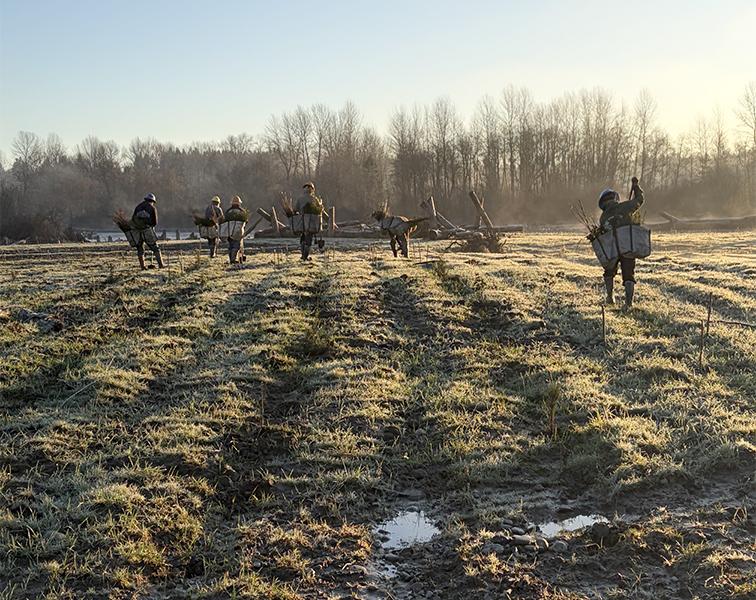
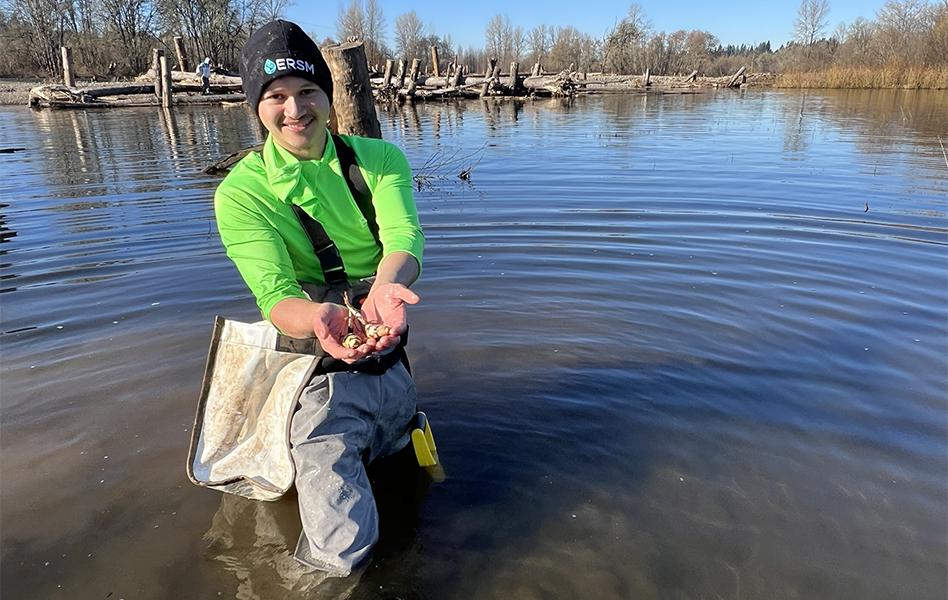
While Tapani’s team is returning from a mandatory seasonal stoppage of in-water work (to protect spawning salmon and steelhead), the remainder of the project team and volunteers continued working through the winter. Shortly after the heavy equipment operators left for the season, skilled revegetation crews from Biohabitats, R. Franco Restoration, Ash Creek Forest Management and ERSM LLC descended upon the newly restored and reconnected floodplain to install 23 different native tree and shrub species, including over 40,000 willow cuttings and 104,850 other species such as red osier dogwood, black cottonwood, Douglas-fir, and spirea.
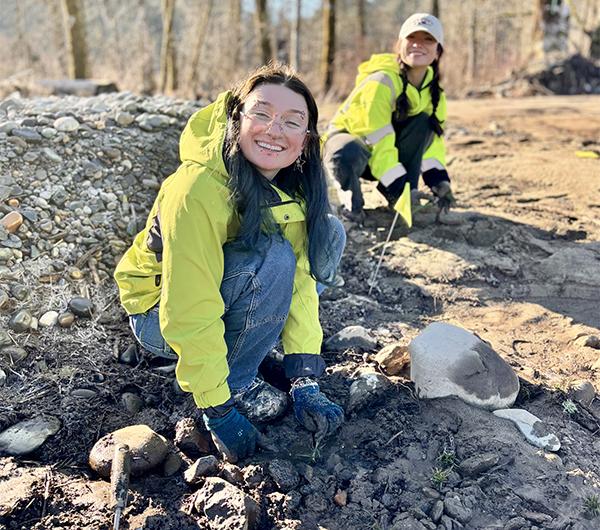
Revegetation is a critical component of a successful restoration project. A riparian area that is densely vegetated with native trees and shrubs helps improve water quality, reduce erosion, and provides critical habitat for fish and wildlife. Because revegetation is so important to the success of a project, the Estuary Partnership teamed up with Clark County Legacy Lands to enlist the support of community members to assist in the revegetation efforts. The Estuary Partnership and Clark County co-hosted 16 community planting events over the winter. Local school groups also participated in the revegetation process—18 classrooms from 4 schools visited the East Fork Lewis River over the winter to learn about the river and help restore it. These hardworking volunteers and students got a behind-the-scenes tour of the project site while planting more than 9,000 native trees and shrubs in newly restored areas.
Construction of the East Fork Lewis River Reconnection Project will conclude in October and will be followed by several years of additional revegetation work.
The East Fork Lewis River Reconnection Project is funded by the Department of Ecology Floodplains by Design and streamflow restoration, Washington Recreation and Conservation Office Salmon Recovery Funding Board, and NOAA Restoration Center.
To learn more about the project, including an overview of the accomplishments from the first year of construction, visit the project website.