Recommended Citation: Lamprey Technical Workgroup. 2023. Comparison of Pacific Lamprey and Pacific Salmon Life Histories, Habitat and Ecology, March 8, 2023. Available: https://www.pacificlamprey.org/ltwg/ Acknowledgements: This document was drafted by a subgroup of the Lamprey Technical Workgroup (in alphabetical order): Monica Blanchard (WDFW/USFWS), Josh Boyce (USFWS), Benjamin Clemens (ODFW), Kelly Coates (Cow Creek Tribe), John Crandall (Methow Salmon Recovery Foundation), Ann Gray (USFWS), Julie Harris (USFWS), Amy Horstman (USFWS), Tracy Hruska (CREST), Aaron Jackson (CTUIR), Ben
Western painted turtle research and habitat restoration underway at the Sandy River Delta – your participation is needed!
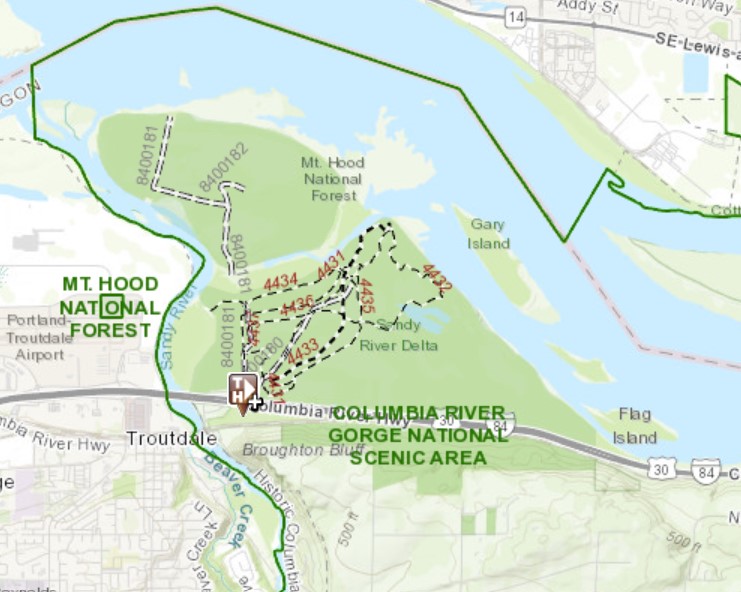
Located at the confluence of the Sandy and Columbia rivers, The Sandy River Delta is a popular recreation area for walkers, horseback riders, and birdwatchers. It is also important habitat for the western painted turtle (Chrysemys picta bellii).
Sandy River Delta
Oregon Department of Fish and Wildlife considers the western painted turtle to be a Sensitive-Critical species – meaning that there are significant challenges impacting the turtles’ abundance, distribution, diversity, and/or