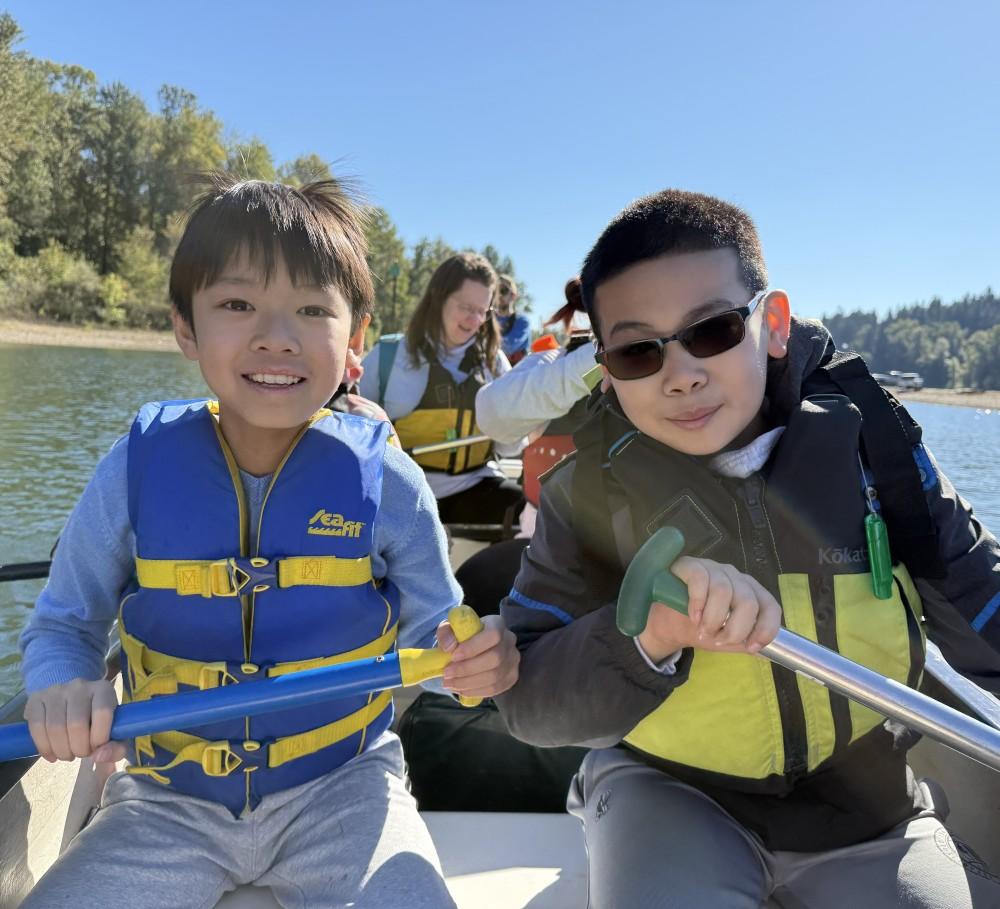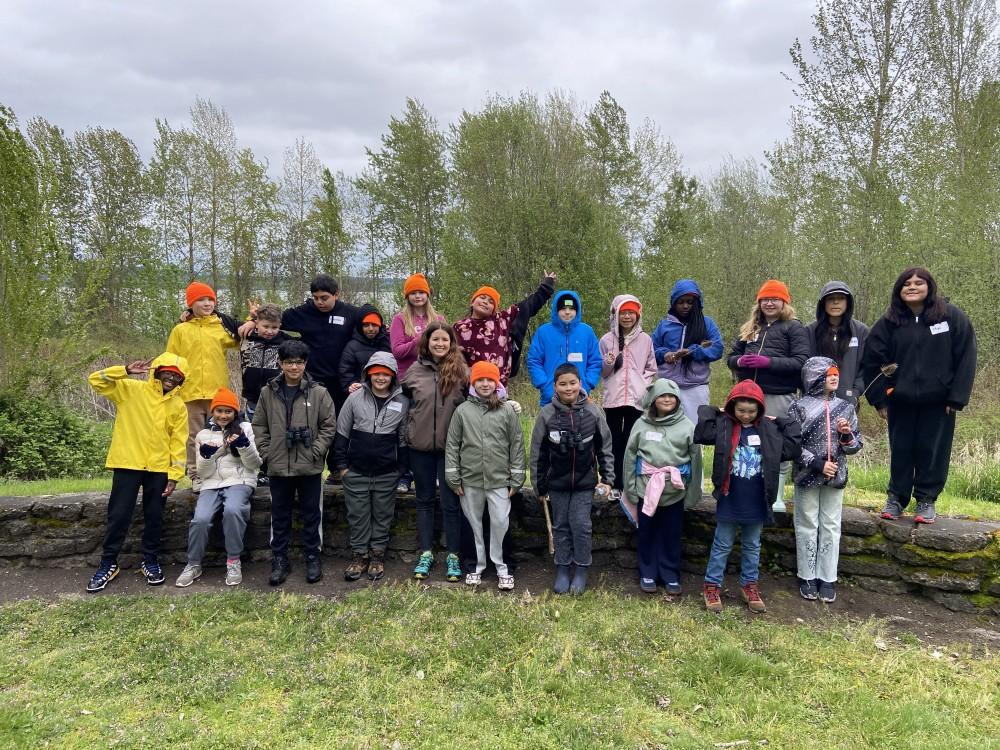
School’s out for the summer, and we’re celebrating another successful year of environmental education. During the 2025–26 school year, our outstanding environmental educators provided high-quality science education to 2,945 students across 12 school districts throughout the lower Columbia River region. Our classroom lessons helped students understand complex topics through fun, hands-on activities, including a trout dissection lesson on anatomy and adaptations, water quality lessons featuring a giant Columbia River Basin watershed map, and plant identification activities connected to new on-campus green stormwater infrastructure.
Left: Walnut Grove 5th graders on a nature hike at Vancouver Lake Regional Park.
In addition to these engaging indoor lessons, we curated field experiences for each classroom. These experiences included service-learning projects such as planting native trees and shrubs, creating a working model of the Vancouver Lake watershed along the lakeshore, playing a native plant identification tag game (you’re it, Oregon grape!), and conducting water quality testing with scientific monitoring equipment.
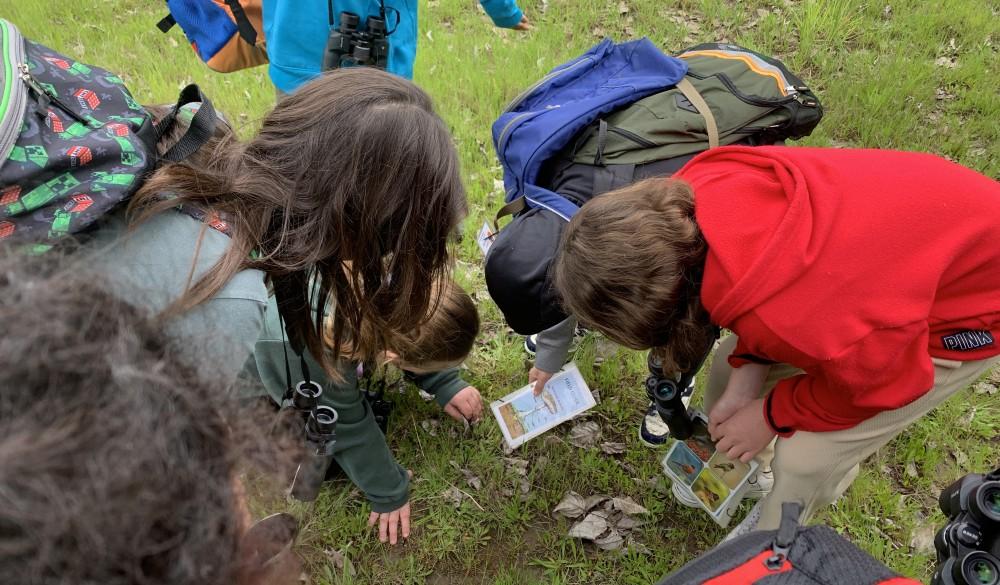
Right: students ID mushrooms at Vancouver Lake Regional Park
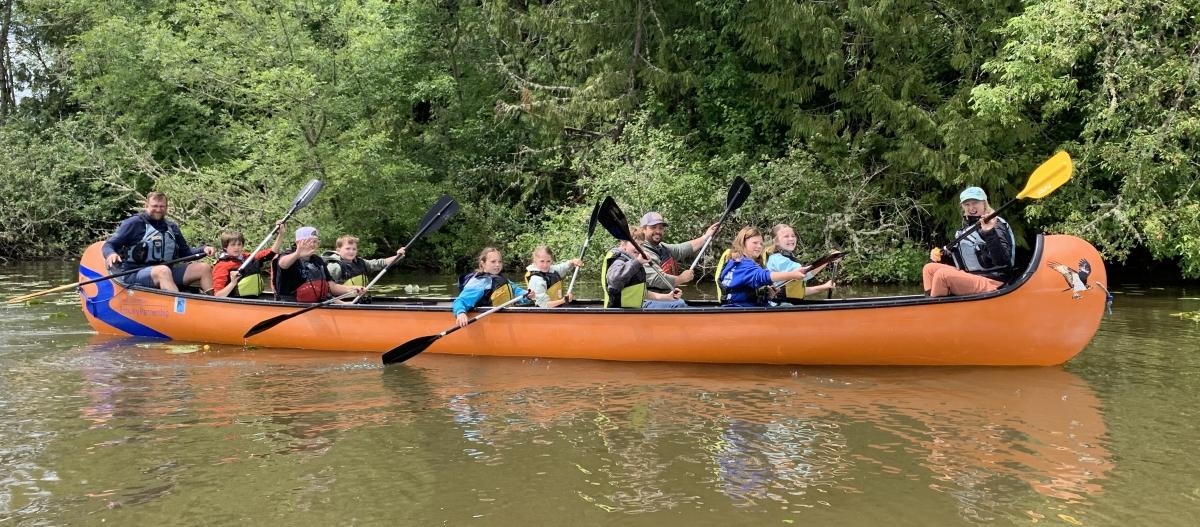
Above: Sauvie Island School students paddle one of our Big Canoes on Multnomah Channel.
Our environmental education program is leaving a lasting impression on students. Here’s what their teachers have to say about our work:
“During our field trip this year, one of the most rewarding moments was watching students connect classroom learning with the real world. Several students who are normally quiet or hesitant in class became highly engaged once they were able to explore and ask questions in a hands-on environment. One student, who often struggles to stay focused during regular lessons, took the lead in asking thoughtful questions and helping classmates observe what we were seeing.
"It was exciting to see students collaborating, making connections, and showing genuine curiosity. Experiences like this remind us that learning outside the classroom can spark confidence, engagement, and a deeper understanding that is sometimes hard to achieve within the walls of a classroom.”
- Bryan Moxley, Chief Umtuch, 5th grade teacher.
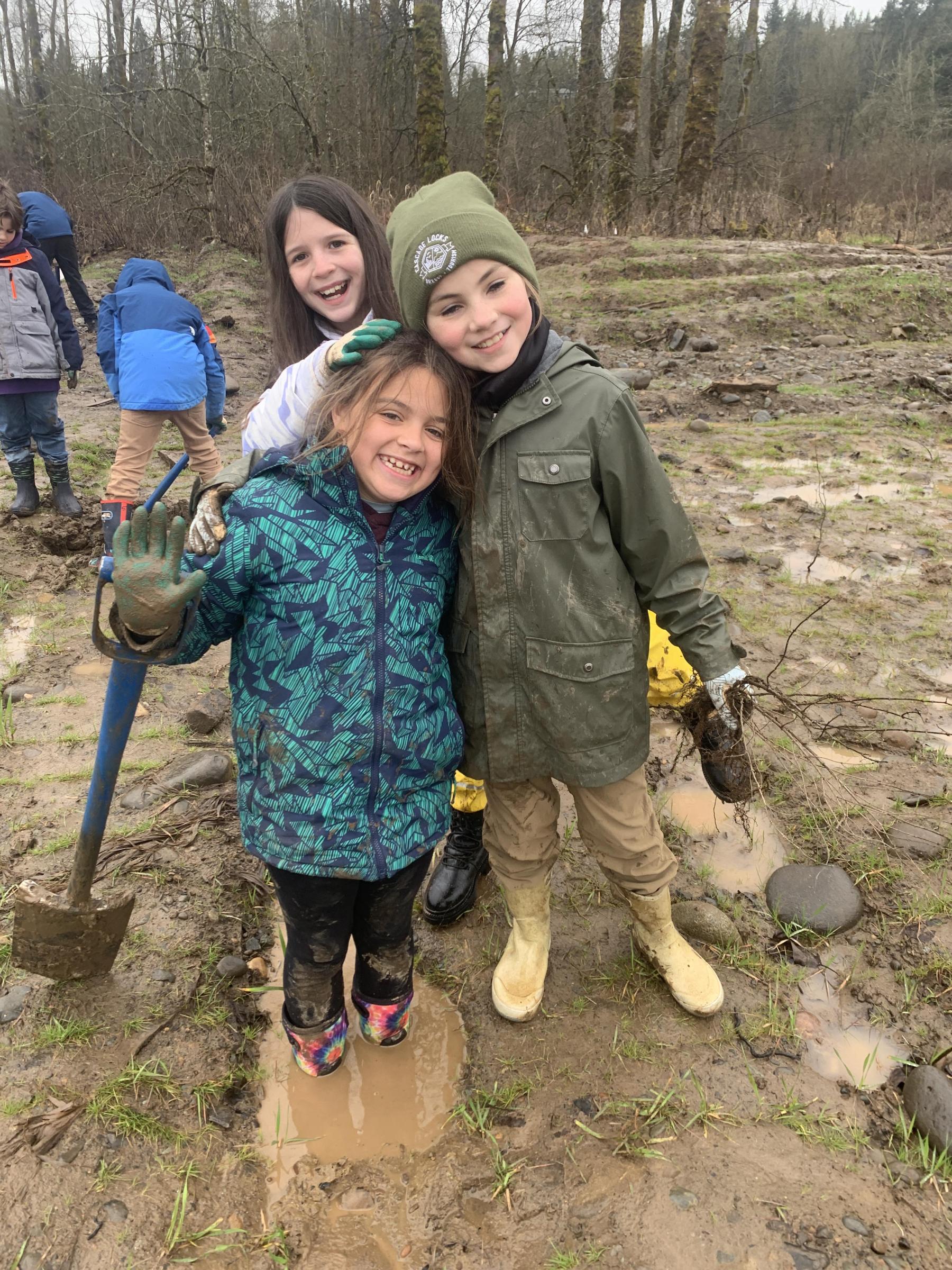
Left: Lupine Experiential School students pause from planting shrubs in the restored East Fork Lewis River floodplain.
“One of my students recently moved from an inner-city school and haven't spent much time on trails. He was so inquisitive and engaged on this trip. Typically, he sits at his desk with his hoodie pulled up and doesn't participate. This field trip brought out his personality. He rated it in his top 5 field trips of all time.”
- Shelley Lee, 5th grade teacher at Helen Baller
“Students love going out in the canoes, as many students have never had the opportunity to be in a boat before this field trip. The physical activity of doing ‘habitat restoration’ burns off energy but also allows students to make connections to the content we have learned in class about the effect of invasive species on salmon habitat and other Oregon species. Students have learned so much about water quality through your program - it was the first exposure on how to perform these tests. Between the pre-lessons in the classroom and the field trip testing, they have been able to do this in the classroom unassisted when checking the water quality in our salmon tank.”
- Karen Morgan, 4th grade teacher from Mount Scott Elementary
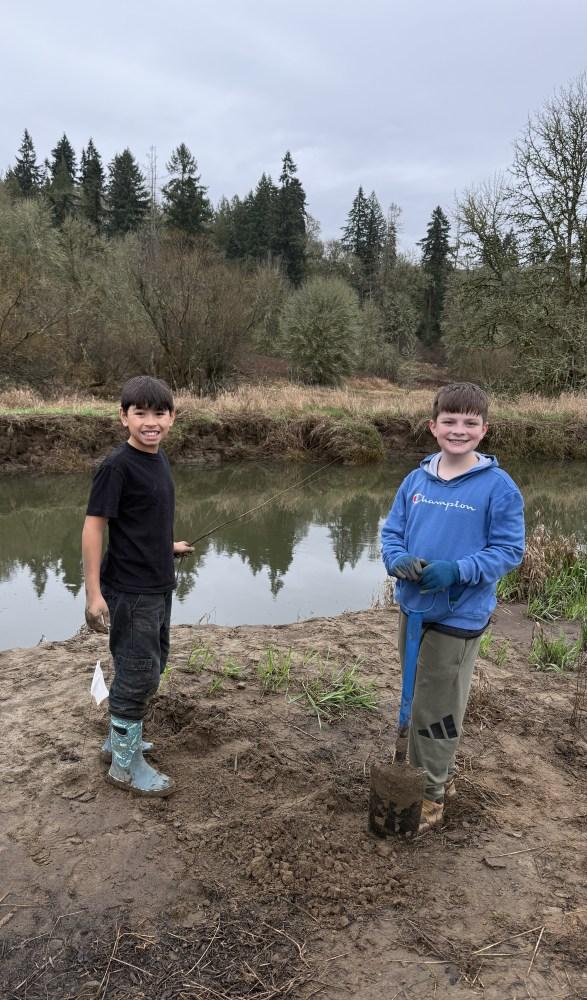
Right: Lake Shore Elementary students plant native trees along Salmon Creek.
“The hands-on aspect has been fabulous. Giving students the freedom to explore during a field trip gave many confidence as well as added appreciation for nature and being outside. The in-class lessons were top-notch, and the educators were absolutely fabulous.”
- Marie Klemmer, 5th grade teacher at Columbia River Gorge Elementary
“I loved seeing my students experience nature in such a free and fun way! They got to be kids, play in sand, touch branches and leaves. The highlight was seeing all the birds and using binoculars to spot different kinds. It's an experience a lot of our school kiddos don't ever get to have.”
- Lily Orlov, Walnut Grove Elementary 5th grade
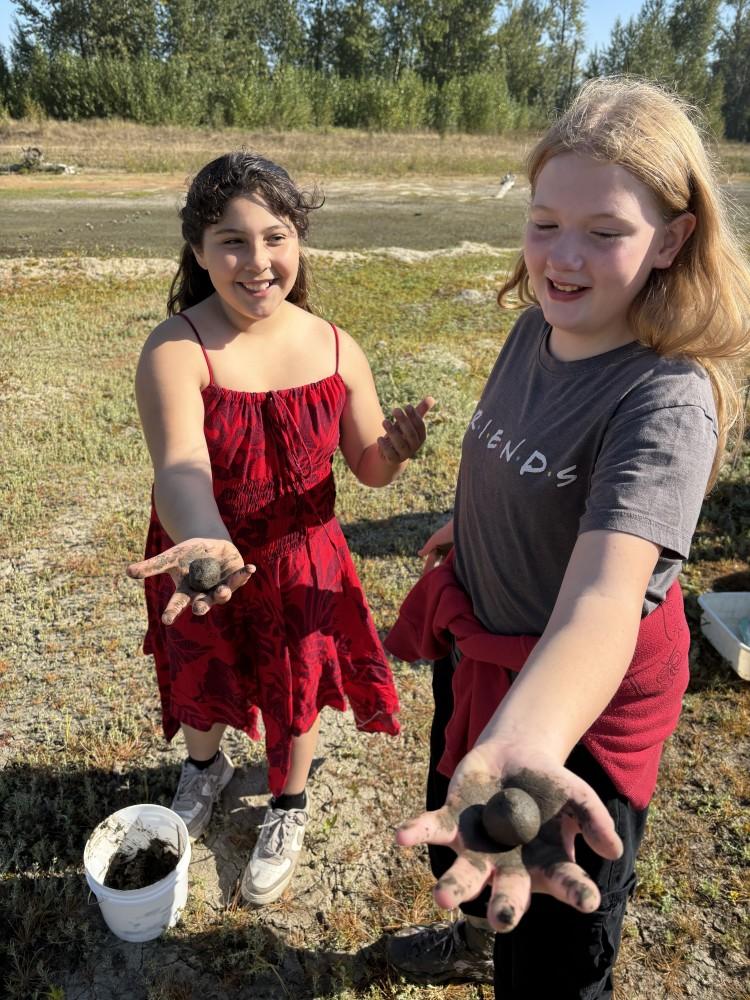
Left: Columbia River Gorge Elementary School 5th graders made wapato seed balls to help propagate this First Food at Steigerwald Lake National Wildlife Refuge.
We’re thrilled to have been able to facilitate such memorable and meaningful experiences to students and schools at no cost, thanks to the generosity of our funders:
- Washington Department of Ecology
- Oregon Watershed Enhancement Board
- NOAA Restoration Center
- US Fish and Wildlife Service
- Port of Vancouver
- City of Vancouver
- Clark County
- Camas Washougal Community Chest
- Gray Family Foundation
- U.S. EPA (National Estuary Program, Columbia River Basin Restoration Program and the Infrastructure Investment and Jobs Act)
- Portland Public School Climate Project
- Oregon Department of Fish and Wildlife’s Oregon Conservation and Recreation Fund
Right: Mt. Scott Elementary 4th graders paddle one of our Big Canoes on the Willamette River.