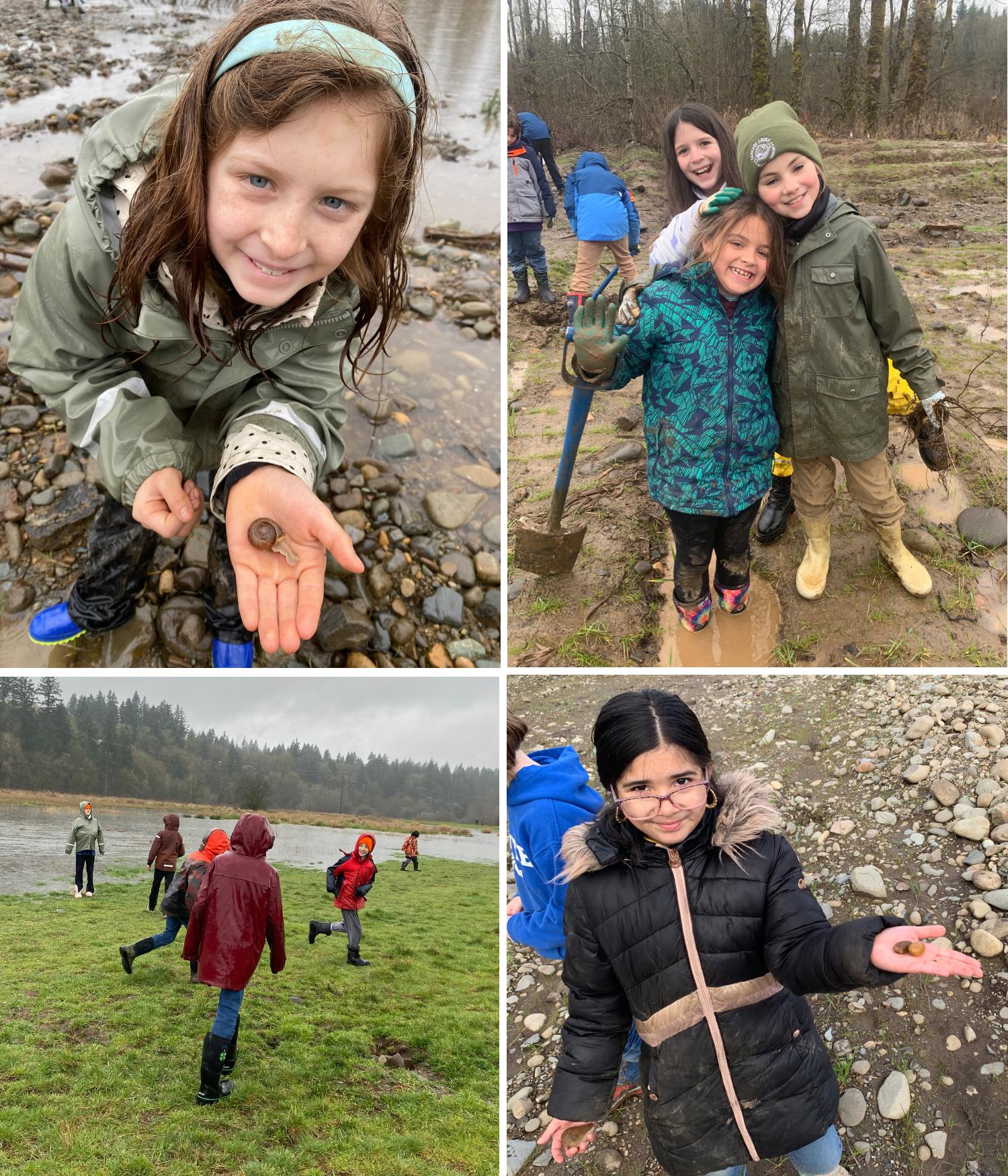
The East Fork Lewis River Reconnection Project is more than a large-scale floodplain reconnection effort—it is also a learning laboratory where students gain hands-on experience in river ecology, native plants and wildlife, geology, and habitat restoration.
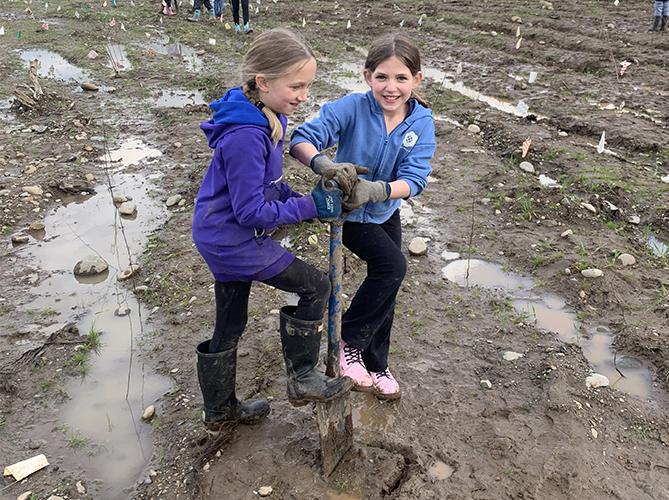
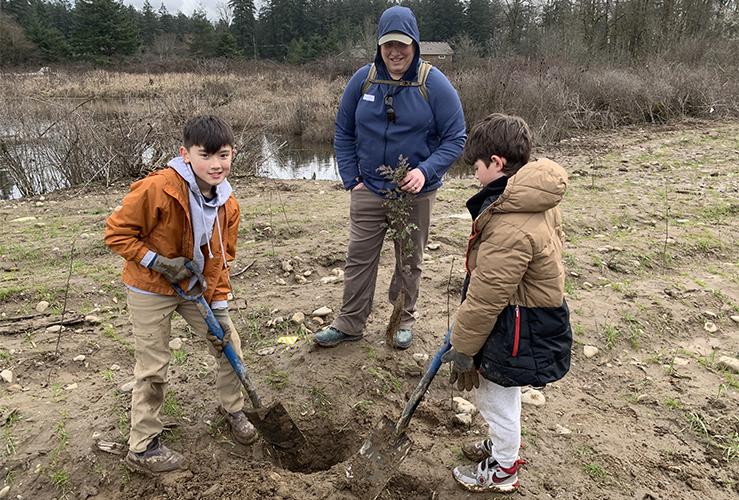
This winter, nearly 500 students from four local elementary schools participated in behind-the-scenes field trips that allowed them to explore the restoration site and apply lessons learned in the classroom. These lessons were taught by environmental educators from the Estuary Partnership and were designed to deepen students’ understanding of the river and its restoration.
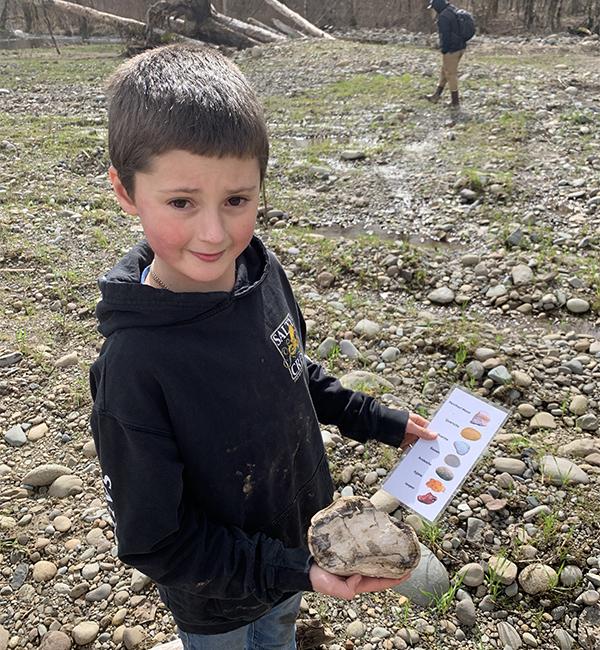
Working closely with restoration ecologists, the Estuary Partnership’s environmental education team developed classroom lessons, supporting materials, and field trip experiences centered on the East Fork Lewis River Reconnection Project. Using age-appropriate language, educators taught students about native plant selection for riparian restoration and the benefits of braided rivers for salmon and watershed science. Because this stretch of the East Fork Lewis River naturally accumulates rocks—and the core of the project involves restoring former gravel mines—a new geology and rock identification field trip activity was added. This helped students connect the excitement of finding a “cool rock” with the unique geologic history of the area.
To further prepare students for their field trip to the East Fork Lewis River, the Estuary Partnership’s educators also created a brochure and a video explaining the restoration project and what students and their families could expect to see and experience on site.
The Estuary Partnership strives to maximize the public benefits of every restoration project it undertakes. Connecting local schools to restoration projects turns them into learning laboratories. This approach ensures that the benefits of restoration extend beyond wildlife habitat improvements, reduced flood and erosion risks, and local employment—and into classrooms, where engaging, high-quality science education is critically needed.
The classroom lessons and field trips to the East Fork Lewis River were provided to schools at no cost thanks to support from NOAA Restoration Center, Department of Ecology Floodplains by Design, and Washington Recreation and Conservation Office Salmon Recovery Funding Board. Thank you!