Latest news & updates from the Lower Columbia Estuary Partnership
If you're having trouble viewing this email, you cansee it online.
East Fork Lewis River Reconnection Project enters final year of construction
Construction crews with Tapani Inc. are gearing up for the final year of restoration along the East Fork Lewis River. Crews began mobilizing during the week of April 20, focusing on preparing the job site for the return of heavy equipment and dewatering the four remaining abandoned gravel pits so they can be restored and reconnected to the East Fork Lewis River floodplain.
While Tapani’s team is returning from a mandatory stoppage of in-water work, the broader project team never stopped working. Shortly after the heavy equipment operators left for the season, skilled revegetation crews descended upon the newly restored and reconnected floodplain to install 23 different native tree and shrub species, including over 40,000 willow cuttings and 104,850 other species such as red osier dogwood, black cottonwood, Douglas-fir, and spirea. Continue reading....
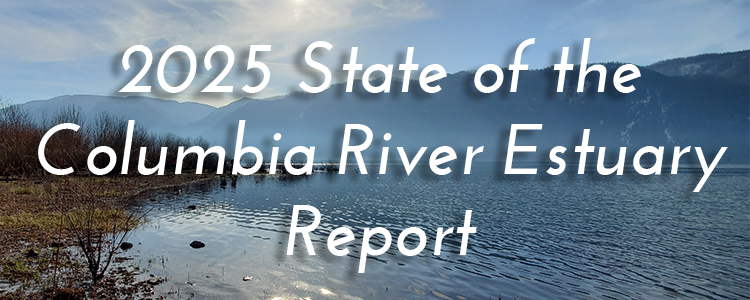
Every five years, we release a report documenting conditions along the lower Columbia River and estuary. The report delves into five specific indicators to mark the status, trends, opportunities, and challenges facing the Columbia River:
The first three chapters of the 2025 report, Connecting People to the Columbia, Imperiled Species, and Habitat are available now. Additional chapters will be released in the coming months.
2026 Science to Policy Summit: Lessons and Opportunities from the Columbia River Basin Restoration Program
The Columbia River Basin Restoration Program is shedding light on critical water quality challenges while also implementing solutions for reducing toxic contaminants across the Columbia Basin.
The 2026 Science to Policy Summit will bring together researchers and leaders to share results from recent monitoring and toxics reduction efforts and discuss opportunities to apply the data-driven lessons learned from Columbia River Basin Restoration Program-supported work to achieve basin-wide impact.
Please mark your calendars to join us on September 2, 2026 from 10 a.m. - 2 p.m. at Lacamas Lodge in Camas, Washington.
More information about the Science to Policy Summit will be available soon. Please contact Catherine Corbett, ccorbett@estuarypartnership.org, with any questions.
You’re invited: community depaving event at Chief Joseph Elementary School
Join us on May 30, 2026, for a community depaving event, co-hosted with Depave, to kick off the green stormwater infrastructure project at Chief Joseph Elementary School in North Portland. We’ll use hand tools to pry up asphalt to make way for green infrastructure that will capture toxins from stormwater runoff before they enter local waterways. Depave will provide instruction and training on tool use, effective asphalt removal, and safety.
Once the human-powered depaving is complete, Brown Contracting Inc. will take over—constructing 3,000 square feet of stormwater planters along the schoolyard perimeter to manage runoff from more than one acre of impervious surface, installing benches, and rerouting a roof downspout into a newly built stormwater planter.
The Chief Joseph project is part of our School Stormwater Reduction program, which designs and builds stormwater retrofits at schools to reduce pollutants entering the Columbia River watershed while supporting environmental education and community engagement. Funding is provided by the EPA’s Columbia River Basin Restoration Program and the City of Portland Bureau of Environmental Services’ Percent for Green program.
Before we fully turn the page from winter to spring, we want to pause and express our deep gratitude to over 1,000 volunteers who planted nearly 20,000 native trees and shrubs across six riparian restoration sites in Oregon and Washington.
Through rain, frost, and the occasional glimpse of warming winter sunshine, volunteers dedicated their time and energy to planting trees and shrubs that will help lower stream temperatures, reduce erosion, and provide vital wildlife habitat for decades to come.
The hard work of these volunteers can be seen at Mable Kerr Park, Steigerwald Lake National Wildlife Refuge, the East Fork Lewis River, Salmon Creek, Fox Creek, South Scappoose Creek, and Beebe Island.
While none of this restoration work would be possible without our incredible volunteers, we also want to give a heartfelt thank-you to the partner organizations that co-hosted planting events with us and to the funders who make this work possible:
Steigerwald: US Fish & Wildlife Service*
Beebe Island: Clackamas River Basin Council,Oregon Watershed Enhancement Board*, Bonneville Environmental Foundation
East Fork Lewis River: Clark County Legacy Lands, NOAA*, Washington Department of Ecology Floodplains by Design*, Washington Recreation and Conservation Office Salmon Recovery Funding Board*, NOAA Restoration Center*
Salmon Creek: Clark County Legacy Lands, Washington Department of Ecology*, National Estuary Program’s Infrastructure Investment and Jobs Act *
Fox Creek: Lower Columbia Watershed Council, Friends of Fox Creek, City of Rainier, Oregon Watershed Enhancement Board*
South Scappoose Creek: Scappoose Bay Watershed Council, Scappoose High School, Oregon Watershed Enhancement Board*
Campen Creek at Mable Kerr Park: City of Washougal, National Estuary Program’s Infrastructure Investment and Jobs Act*, Washington Department of Ecology Centennial Clean Water Fund*, Washington Recreation and Conservation Office Salmon Recovery Funding Board*
*=funder
East Fork Lewis River Reconnection Project: a learning laboratory for local students
The East Fork Lewis River Reconnection Project is more than a large-scale floodplain reconnection effort—it is also a learning laboratory where students gain hands-on experience in river ecology, native plants and wildlife, geology, and habitat restoration.
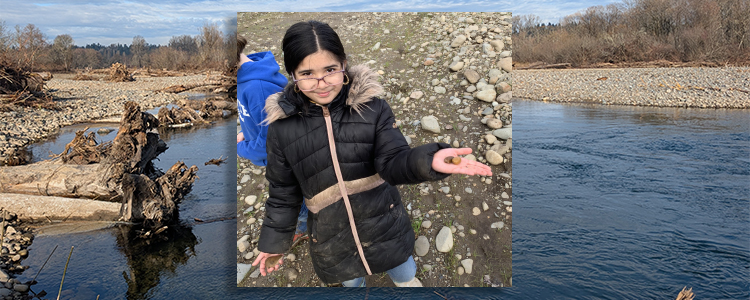
This winter, nearly 500 students from four local elementary schools participated in behind-the-scenes field trips that allowed them to explore the restoration site and apply lessons learned in the classroom. These lessons were taught by our environmental educators designed to deepen students’ understanding of the river and its restoration.
Working closely with restoration ecologists, our environmental education team developed classroom lessons, supporting materials, and field trip experiences centered on the East Fork Lewis River Reconnection Project. Using age-appropriate language, educators taught students about native plant selection for riparian restoration and the benefits of braided rivers for salmon and watershed science. Because this stretch of the East Fork Lewis River naturally accumulates rocks—and the core of the project involves restoring former gravel mines—a new geology and rock identification field trip activity was added. This helped students connect the excitement of finding a “cool rock” with the unique geologic history of the area. Continue reading...
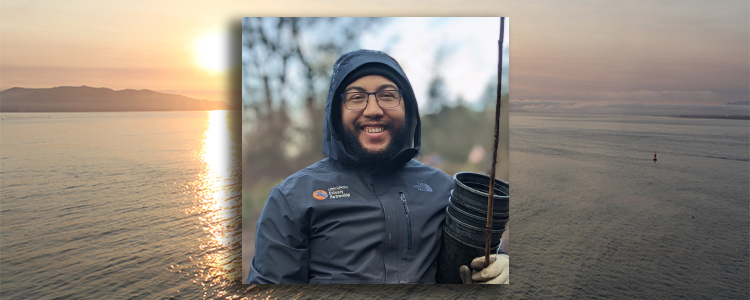
We are thrilled to celebrate the fifth work anniversary of Environmental Educator Alex Rhodes! On any given day, Alex can be found in classrooms providing hands-on science education to students, guiding a 29’ Estuary Partnership Big Canoe down a local waterway, or planting native trees and shrubs next to a creek to improve water quality and boost habitat for wildlife (or completing the essential prep or post-event clean-up from all of these activities!).
While all of these are highlights of his work, Alex’s favorite moment at work was when his co-workers organized a baby shower last summer prior to the birth of his son, Aden Rhodes.
Happy 5th work anniversary, Marci Krass
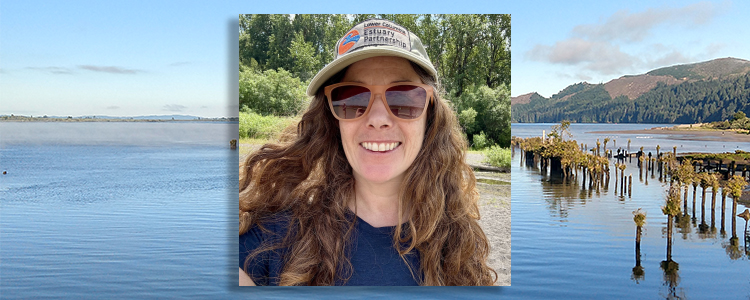
Please join us in celebrating Marci Krass’s fifth work anniversary. As a Principal Restoration Ecologist, Marci plans and manages small-scale restoration and stewardship projects led by our Community Programs team. She also builds relationships with partners throughout the region to support community-led habitat restoration efforts.
Marci is looking forward to designing and developing new restoration projects, including the floodplain reconnection project along lower Burnt Bridge Creek in Vancouver, Washington. This effort taps into what Marci loves most about her job: collaborating with people and spending time in the field observing the positive changes resulting from restoration projects year after year. Happy fifth work anniversary, Marci!
Three more days to give for Earth Month
Earth Month is almost over, butour work to restore and care for the Columbia River never is. Your Earth Month gift will be put to work: 💧 Improving water quality 🐟 Restoring critical fish and wildlife habitat 🌲Reforesting Riparian Areas 🌱 Engaging 3,000+ students in hands-on science education
2 ways to support the Estuary Partnership in your daily life
Fred Meyer Community Rewards
Link your Fred Meyer Rewards card to the Estuary Partnership by searching for "Lower Columbia Estuary Partnership" or using the code EG199. Every time you shop, a portion of your total comes to support hands-on restoration and education.
BottleDrop
Supporters in Oregon can donate their BottleDrop credit to the Estuary Partnership! Just contact us to request the special blue bags designated for nonprofits. Once your bag is full of redeemable cans and bottles, drop it off at any BottleDrop Redemption Center, and the refund will automatically be donated to the Estuary Partnership, supporting efforts to restore and care for the lower Columbia River. You can also donate proceeds from your personal BottleDrop account to the Estuary Partnership here.
Lower Columbia Estuary Partnership 400 NE 11th Avenue Portland, OR 97211
To restore and care for the waters and ecosystems of the lower Columbia River, for current and future generations of fish, wildlife, and people.
.jpg)


.jpg)